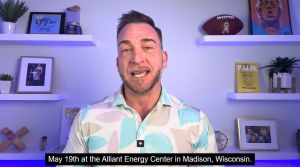
Click the image below for an introduction to Paul J. Long!
No wonder our minds habitually focus on what’s wrong and why we’re frustrated instead of where we could be and what it would take to get there. This is where Fundamism™ changes everything.
Workplace culture expert Paul J. Long has discovered a powerful truth: Culture isn’t something you fix—it’s something you create through moment-by-moment choices. Through his principles of deliberate connection, he teaches leaders and teams how to implement “brain pattern interrupts” that shift attention from problems to possibilities.
The insight is simple but profound: You can’t be deliberate and overwhelmed at the same time.
When you become intentional about how you show up, how you connect, and where you focus, you transform your experience—and your organization’s culture.
This keynote is ideal for:
Leaders tasked with improving workplace culture and employee experience.
Teams navigating significant change or challenging market conditions.
Audiences will walk away with:
Practical “brain pattern interrupt” techniques they can implement immediately.
A framework for creating meaningful interactions that enhance team connection and create more of “what’s good.”
A renewed sense of purpose and meaning in their daily lives.
Paul J. Long is a leadership and culture expert who teaches organizations the principles of Fundamism™—a deliberate approach to connection that creates unbeatable workplace cultures. In organizations today, there's a critical disconnect: leaders are overwhelmed, teams are carrying the weight of constant change, and yet companies expect exceptional cultures. Paul's work addresses this gap by showing that culture isn't something we fix—it's something we create through deliberate choices. Drawing from his experience answering 80 customer service calls daily and leading teams of thousands for a Fortune 300 company, Paul developed Fundamism through real-world application. His methodology centers on three simple, actionable practices: owning what you can control, breaking cycles through brain pattern interrupts, and creating moments that matter. His dynamic keynotes—"Culture By Design," "Beyond Satisfaction," and "The Unforgettable Leader"—equip leaders and teams with immediate strategies to reduce overwhelm, energize teams, and build cultures where people thrive. As host of The Fundamism Podcast, Paul shares practical insights with culture champions who are transforming their organizations through the power of deliberate connection.
9:30 to 9:45
Break
9:45 to 11:00
Breakout Session 1
1-A From Courtroom to Conference Room: Thinking Like Counsel, Acting Like HR, Leading with Integrity,
Hope Broadus, JD, UW School of Medicine and Public Health
What happens when you swap the courtroom for the conference room and spend nearly 20 years in the middle of real‑world people issues? In this session, I’ll share practical lessons from my journey as an employment attorney turned HR leader and how that experience reshaped my approach to employee relations, influence, and integrity. We’ll talk about how to “think like counsel” when you’re sorting out risk and process, and “act like HR” when you’re sitting across from leaders and employees who need clarity and fairness. Expect plain language, real stories, and simple tools you can use to handle messy situations in a way that builds trust and strengthens your voice as an HR leader.
By the end of this session, you will be able to:
Use a straightforward decision lens to slow down, clarify the facts, and choose next steps in tough employee relations situations in a way that is both fair and defensible.
Spot common traps in performance management, investigations, and terminations—and describe how avoiding them strengthens your credibility and integrity as an HR leader.
Walk through a simple, legal‑savvy checklist to identify potential risk early (for example, discrimination, retaliation, leave, or safety flags) and use that insight to advise leaders more confidently.
Explain, in everyday language, how solid process and documentation protect employees, leaders, and the organization—and how that transparency builds long‑term influence for HR.
Offer leaders at least two realistic options in a high‑stakes situation, clearly describe the trade‑offs and risks of each, and use those conversations to position yourself as a trusted strategic partner rather than “the policy police.”
Hope Broadus is an experienced human resources executive and former employment attorney who has spent more than two decades helping complex organizations navigate the intersection of people, policy, and risk. She currently serves as Associate Dean and Chief Human Resources Officer for the University of Wisconsin School of Medicine and Public Health, where she leads HR strategy and service delivery for an academic medical center, with a focus on sustainable infrastructure, equitable compensation, and effective workforce planning.
Before joining UW, she held progressively senior HR and employee relations roles at Stanford University, the City and County of San Francisco, and the U.S. Department of Defense, following several years in private practice defending employers in employment and professional liability matters. Her expertise spans employee and labor relations, investigations, performance management, HR policy and process design, and talent strategies across both union and non‑union environments.
A first‑generation lawyer and former Division I student‑athlete, she is known as a trusted advisor and pragmatic problem‑solver who blends a counsel‑like approach to risk with a deeply human approach to leadership. She holds a J.D. from the University of Cincinnati College of Law and a B.A. in Sociology from the University of Pennsylvania and is an active contributor to institutional committees and search processes focused on leadership, equity, and organizational effectiveness.
1-B The 4 C’s: A Transformative Framework for Benefits Success Laura Bermudo & Charlie Parker, Hausmann Group
Take control of your benefits strategy with a simple, strategic framework to help clarify priorities, reduce overwhelm, and drive stronger results. You’ll also gain timely benefit‑trend insights and walk away with a practical roadmap you can put to work immediately.
1-C Black Mirro: The Ethics of AI in HR
Dr. Shari Simpson, Paylocity
This session uses Black Mirror-style scenarios to explore the ethical risks of AI in HR, including bias, privacy, surveillance, and transparency. We will translate these cautionary themes into real HR decisions, from AI in recruiting to AI in performance and monitoring tools. Attendees will learn how to evaluate AI solutions with an ethics-first lens and how to build governance that earns trust with employees and leaders. You will leave with safeguards and practical questions to ask before any AI implementation.

Attendees of this program will:
Identify ethical risks and unintended consequences in AI-powered HR tools.
Build governance and communication practices that support transparency and trust.
Implement safeguards that ensure human oversight and ongoing monitoring of AI use.
Shari Simpson, EdD, is a senior thought leadership leader at Paylocity and a nationally recognized voice in human resources, leadership development, and workplace innovation. With more than 20 years of experience in HR, Shari brings deep expertise across talent strategy, learning and development, employee relations, and organizational culture, paired with a strong academic foundation and a practitioner’s perspective.
Shari holds a Doctor of Education in Leadership and Innovation, along with an MBA, a Master of Human Resource Management, and a SHRM-SCP certification. Her doctoral research focused on how generational differences in learning preferences and competency clarity influence the effectiveness of HR professional development, with an emphasis on adaptive learning, digital self-efficacy, and organizational support. This work directly informs her approach to modern leadership, workforce development, and HR transformation.
11:00 to 11:15
Break
11:15 to 12:15
Late Morning Keynote
Paul J. Long - The Unforgettable Leader: How to Create a Team No One Ever Wants to Leave
In today’s challenging talent landscape, one truth stands out: people don’t leave companies—they leave leaders.

What separates forgettable managers from truly unforgettable leaders? They build the kind of teams no one wants to leave. But when leaders themselves feel disconnected, how can they possibly create the kind of cultures everyone wants to be a part of?
After leading teams of thousands for a Fortune 300 company, Paul understands these critical make-or-break moments. In this deeply impactful keynote, he shares how exceptional leadership isn’t about grand strategies, but deliberate choices that make people feel seen, valued, and energized every day.
This keynote is ideal for:
Leaders who are struggling to retain top talent.
Managers who want to build stronger, more connected teams.
Audiences will walk away with:
Practical ways to boost morale, trust, and retention.
A mindset shift from managing performance to energizing people.
Immediate actions to become the kind of leader people choose to follow.
12:15 to 1:15
Lunch, Announcements and Recognition
Hot buffet lunch with gluten free and vegetarian options available.
Please contact GMA SHRM with any dietary requirements.
1:15 to 2:30
Breakout Session 2
2-A Is Resilience Enough? When Trauma Shows Up to Work,
April Scott, University Wisconsin Madison
What happens when the stressors that employees are facing aren’t individual, but collective? With rising mental health concerns, caregiving strain, change fatigue, and organizational disruption, SHRM’s recent reporting shows that workforce resilience is wearing thin and traditional strategies are failing to meet the moment.

This session explores how collective and organizational trauma show up in behaviors, culture, and team dynamics, and why asking individuals to “be more resilient” is insufficient, and sometimes harmful.
Participants will learn how to recognize trauma responses across groups, understand the broader implications of collective trauma, and apply trauma‑informed, healing-centered HR practices that help rebuild trust, safety, and organizational resilience. The session will also offer guidance for HR professionals on recognizing signs of compassion fatigue in themselves and identifying practical steps to support their own wellbeing.
In this session, participants will:
Explore how to recognize and respond to trauma in the workplace
Understand the differences between collective, organizational, and individual trauma
Learn how HR professionals can respond with compassion, consistency, and care without sacrificing their professional responsibilities or their mental wellness
Dr. April Scott currently serves as the Director of Strategic Initiatives and Wellbeing for Health and Wellbeing at the University of Wisconsin-Madison (UW-M), reporting to the Associate Vice Chancellor of Student Affairs for Health & Wellbeing. In this role, Dr. Scott partners with stakeholders across University Health Services and Recreation and Wellbeing to guide efforts that enhance organizational climate, strengthen leadership development, and foster a culture of psychological safety and inclusion. She leads strategic initiatives designed to improve staff retention and engagement, increase access to quality health and well-being services, and develop training and policies that embed equity and student success as core values within Student Affairs.
With extensive experience driving organizational change in complex environments, Dr. Scott provides expert consultation, resources, and initiatives that promote health equity, well-being, and departmental efficiency. Her work ensures that all students—regardless of their backgrounds, identities, or experiences—have equitable access to high-quality health and well-being services.
Dr. Scott holds a B.S. in Psychology from Tuskegee University, an M.S. in Clinical Psychology from Barry University, and a Ph.D. in Counseling Psychology from Auburn University. She has worked across multiple settings, including substance abuse treatment programs, community mental health centers, a Veterans Affairs hospital, group practice, and university counseling centers. In addition to her administrative leadership, she has over 12 years of instructional experience, including working with special populations such as student-athletes and first-generation college students most recently served as an adjunct instructor at the University of Baltimore in the College of Arts and Sciences.
Dr. Scott’s research interests include resilience, grief and loss, and diversity, equity, and inclusion in organizational settings.
2-B From Search to Success: Elevating Talent Discovery at Your Organization
- Sarah Marshall & Rebecca Swanson, humanworks8
Bring energy and intention back into the way your organization hires. This workshop introduces people-first process improvements that reshape every step of the hiring journey, from defining roles with clarity to delivering a consistent, memorable candidate experience rooted in values. Participants will learn how to build a disciplined, repeatable hiring framework that strengthens alignment, minimizes hiring mistakes, and increases confidence in selecting the right person for the role every time. Walk away with actionable tools and a refreshed mindset that helps your organization move beyond simply filling open positions to intentionally building teams that thrive.


Attendees of this program will:
Participants will evaluate their own hiring process and identify key areas of improvement
Participants will discover how their organization’s unique core values drive the talent discovery process
Participants will learn about evaluating candidates based on all three parts of the mind – Cognitive, Affective and Conative
Sarah Marshall As the Co-Founder and Experience Architect at humanworks8, Sarah partners with executive teams to design and implement strategic initiatives that strengthen organizational culture and elevate the employee experience. She not only builds the roadmap to better culture, but executes that strategy alongside her clients. With extensive experience in corporate communications, she brings a strategic, action-oriented approach to internal communication, talent engagement, feedback systems and workplace well-being strategies. A Kolbe Certified™ Consultant, she also guides leaders in leveraging instinctive strengths to build aligned, high-performing teams. Sarah breaks down the big picture into calculated actions, and excels at envisioning, planning and executing strategies around organizational communication and employee engagement. She loves tapping into her creativity for core values and team development engagements and has worked with nonprofits, family-owned businesses and public sector organizations. Known for her clarity, creativity and operational discipline, Sarah is a trusted advisor to leaders committed to building values-driven cultures. Rebecca Swanson’s ability to make optimistic connections with ease and foster meaningful relationships has contributed to a recruiting career that has spanned more than 20 years. She has built mentorship and internship programs and recruited talent across all levels, from entry to executive. She is an employer brand ambassador, linking all talent actions back to the organization’s core purpose and values to ensure she’s connecting the right people to the right opportunities in partnership with hiring leaders. At humanworks8, think of Rebecca as the talent connector, weighing in on all things talent lifecycle – from first impression to onboarding.
2-C Employment Law Update,
Brian Goodman and Storm Larson, Boardman Clark
Legal issues surrounding employment continue to evolve, even with a divided government at the state and local level. Recent regulatory developments and court decisions continue to impact the workplace. HR professionals need to keep abreast of these changes and assess how these changes might impact their organization going forward.
The Annual Employment Law Update will provide an overview of developments in several major areas of employment law and will help you identify the issues you need to know to be an effective business partner in your organization. This information–packed session will leave you better equipped to assess your organization’s needs with respect to employment law compliance.
Participants will learn:
Key federal and state legislative and regulatory developments;
New regulations and administrative guidance relating to wage and hours; and
How recent judicial cases might affect your practices regarding discrimination, harassment, disabilities, and more.
2:45 - 4:00
Breakout Session 3
3-A Why Conflict Conversations Matter More Than We Think - Jen Emmons, Jen Emmons Consulting
Most organizations treat conflict conversations as a policy issue or a behavior problem. In reality, they are human moments shaped by stress, perception, and how safe someone feels in the exchange.

In this interactive session, attendees will explore performance conversations, peer tension, and managing up through a practical blend of heart-centered leadership, neuroscience in plain language, and emotional intelligence. Rather than focusing only on what to say, we will focus on what is actually driving the conflict and how to respond in a way that reduces defensiveness without lowering standards.
Participants will leave with a clear structure, practical language, and a root-cause lens they can apply immediately. When approached differently, conflict conversations stop being leadership landmines and become moments that strengthen accountability, performance, and trust.
What Attendees Will Leave With
A clear way to identify what is driving the tension and how to respond effectively
A real-time reset strategy for moments when defensiveness rises
A clear conversation structure that balances acknowledgment and accountability in the same exchange
Specific, behavior-focused language that lowers defensiveness while keeping standards clear
A method for addressing issues early, before negativity bias turns one moment into a defining one
Tools to lead difficult conversations without absorbing emotional fallout or avoiding them altogether
Jen Emmons is a published thought leader, speaker, and career coach who addresses common workplace challenges through a unique blend of heart, science, and emotional intelligence.
With experience leading HR and talent initiatives across Fortune 500 companies and expanding her impact as a higher education instructor, she brings both strategic insight and practical application to her work.
As founder of Jen Emmons Coaching & Consulting, she empowers professionals and organizations through career coaching, leadership training, and speaking engagements.
Her work has been featured in Fast Company, Yahoo, MSN, Brava Magazine, and more.
3-B AI and Automation Impact on Total Rewards
- Summer Rector, HCSC
Summer Rector is the Executive Director, Executive Compensation & Benefits at HCSC, where she leads total rewards for a large, multi-state health insurance organization. She brings more than 16 years of experience spanning HR consulting and in-house leadership roles, including work at Mercer, Accenture-DayNine, QTI Consulting, and Discover Financial. Summer has a Bachelor of Business Administration degree in Management and Human Resources from the University of Wisconsin–Madison and holds a SHRM-SCP certification. She has also served as a SHRM Learning System instructor, helping HR practitioners deepen their expertise in preparation for SHRM certification.
3-C Employment Law Update
Brian Goodman and Storm Larson, Boardman Clark
Legal issues surrounding employment continue to evolve, even with a divided government at the state and local level. Recent regulatory developments and court decisions continue to impact the workplace. HR professionals need to keep abreast of these changes and assess how these changes might impact their organization going forward.
The Annual Employment Law Update will provide an overview of developments in several major areas of employment law and will help you identify the issues you need to know to be an effective business partner in your organization. This information–packed session will leave you better equipped to assess your organization’s needs with respect to employment law compliance.
Participants will learn:
Key federal and state legislative and regulatory developments;
New regulations and administrative guidance relating to wage and hours; and
How recent judicial cases might affect your practices regarding discrimination, harassment, disabilities, and more.